Showing posts with label Forward Day by Day. Show all posts

Thursday, September 29, 2011

Michaelmas and Wonder in Creation

(Rosh Hashanah, Too!)

Today was the Feast of St. Michael and All Angels, also known as Michaelmas. Traditionally, Michaelmas has marked the divide between late summer and fall – hence the British ‘Michaelmas term’ for what we would call ‘fall semester’.

The angels described in the Bible are different from the cute angels of popular culture. Something about Biblical angels makes it necessary for them to say, “Fear not!” when they appear to humans. Exactly what sorts of creatures these are is hard to say; exactly what the word ‘angel’ represents is at least in part a mystery to us. But they are creatures, part of God’s creation. Because today celebrates all angels, it’s in part a celebration of those mysteries in creation that are beyond our understanding. With the change in seasons and a reminder of the wonder and mystery of creation, Michaelmas is a good time to renew our own sense of wonder at God’s creation.

Today’s meditation in Forward Day by Day says that today’s observance calls us to “remember the vastness of God’s creation in which angels and archangels fill the heavenly court.” The writer adds:

We inhabit a cosmos greater than anything we can imagine, yet all is within the reign of God. To remember this is to grow in awe, trust, and hope in God’s purpose.
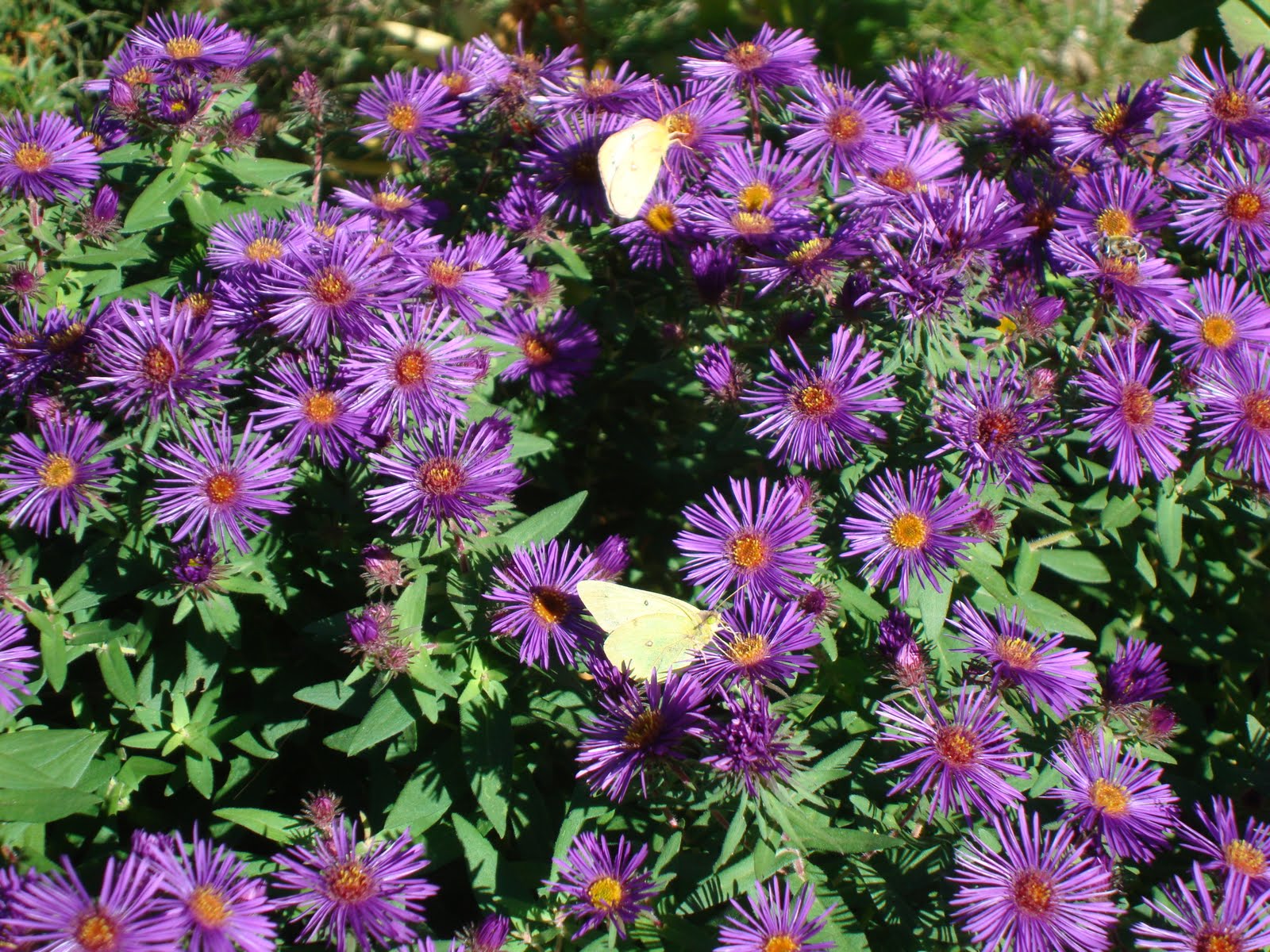
Wonders abound this time of year in our corner of creation. The rich colors of autumn leaves and grasses are probably the most striking change. The flowers in fields and gardens that are still blooming have their own striking colors. Butterflies, including monarchs, are migrating. The air is crisper than it was even a couple of weeks ago, and the sky seems to be a deeper shade of blue as fall sets in. At night, the fall sky can be amazing.

The practice of wonder at the earth, the heavens, and the mysteries of all of God’s unimaginably vast creation can help us be mindful of the majesty, power, and goodness of the Creator and more caring of God’s creation. Our own part of God’s good creation, this blue-green planet we call home, is in need of care and defenders. Today’s reading from Revelation (Revelation 12:7-12 ) about the war in heaven between Michael and his angels against the dragon and his angels gives us an ideal of the forces of good battling the forces of evil. Our battles against forces that would destroy much of the rich variety of life on earth through pollution, habitat destruction, and greenhouse gas emissions require the same sort of persistence and courage that all battles require. It also requires wisdom, the ability to see both the big picture and the smallest of creatures, and the willingness to learn and adapt. Along with calling us to wonder, Michaelmas can call us to renew our commitment to fight for a sustainable environment for all living things.

While we are observing Michaelmas today, our Jewish brothers and sisters are observing Rosh Hashanah, the Jewish New Year and beginning of the High Holy Days. Through the GreenFaith website, I found the post The Binding of Isaac and a Spirit of Optimism by Rabbi Edward Bernstein, a GreenFaith Fellow. Rabbi Bernstein tells how awe of creation and the Creator permeate the story of the binding of Isaac (Genesis 22), one of the biblical texts in the Rosh Hashanah liturgy. Rabbi Bernstein helps us see the dual themes of awe in creation and a call to stewardship of creation in this story. It’s well worth a read, and wonderfully relevant to our own observance this day.

Friday, October 22, 2010

The Pharisee and the Tax Collector

(Luke 18:9-14)

How intentional would we be about environmental stewardship if we considered the needs of others as much as we consider our own comparatively short-term self interest? This question came to me as I thought about yesterday’s reflection in Forward Day By Day.

The reflection was on the story of the Good Samaritan, but the author of the reflection (written in 1967 and republished as part of Forward’s 75th anniversary retrospective) brought in the parable of the Pharisee and tax collector to make a point. This latter parable (Luke 18:9-14) is the Gospel lesson for this Sunday. The author’s point in the comparison was this: in both parables, Jesus says that someone who was scrupulously observant of the Law is not acting rightly because he is either ignoring or despising others. The Pharisee in Sunday’s parable actually stands in the temple giving thanks to God that he isn’t like other people, those less pure people like the tax collector standing near him.

The author of this 1967 reflection wrote: “[W]hat wonders would take place if we demanded of our elected representatives that human need, rather than self-interest, be the only criterion in politics, in social welfare, and in international relations!”  We can ask the same question of ourselves as we look at pollution and climate change and consider – all too slowly – how and whether to make changes that would give us a chance at long-term sustainability.  

Coal train in Nebraska
Does it matter whether we switch to a greener economy because we become convinced that it’s in our own short-term best interest, that’s there’s money to be made in wind or solar energy; or because we look ahead and realize our current economy isn’t sustainable and so it’s in our long-term best interest to make some changes; or because we love the Creator, and so love the creation and the connection to God we experience through it; or because we hear the cries of God’s children in other places who are already suffering the effects of climate change and pollution?  Does it matter whether we do it for our own self-interest or out of love? Secular environmentalists and some religious environmentalists think that the reason doesn’t matter; what matters is that we make the change before it’s too late. That’s tempting, but Jesus taught that what’s in our hearts matters.

Knowing the benefits to ourselves of being greener helps make the changes easier, but if self-interest is our only reason for action, it’s not what Christ asks of his followers. Moreover, at any point where the going gets tough, I might decide that my self-interest lies elsewhere and decide to go back to the old ways.

But maybe the distinction between selfishness and love collapses with the last sentence of this Sunday’s lesson: “[A]ll who exalt themselves will be humbled, but all who humble themselves will be exalted.” From Christ’s perspective, choosing to put ourselves first is always a short-term choice. Healthy love for ourselves is intertwined with love for God and love our neighbor. Self-love that is divorced from love for others eventually shows itself to be something else, something other than love.

****
Take time to smell the mums!

Monday, April 27, 2009

Recovering Greenness


Today’s reading (April 27) from Forward Day by Day ended with these lines from George Herbert’s poem “The Flower”: “Who would have thought my shriveled heart / Could have recovered greenness?”

The past couple of weeks have brought much to feed our souls: a couple of lovely April days, flowering trees, and Earth Day’s reminders both of the wonder of God’s creation and of the heartening increase in environmental consciousness. Just this evening, news is being posted about today’s meeting in Washington to lay the groundwork for a United Nations agreement among the top greenhouse gas polluters to work on slowing or reversing climate change – a step forward.

On the other hand, the past couple of weeks have also brought news of the spread of a new kind of flu, continuing concern about the economy, and Earth Day’s reminders of the severity of the climate crisis and of the effects of pollution on humans and other living things. The less pleasant news seems like enough to shrivel our hearts, while the beauty and wonder of creation and the way our bonds with the Earth pull us toward better stewardship pull us in other direction, to what this 17th century Anglican clergyman and poet called “greenness”.

Late Sunday afternoon I did a little puttering in my garden despite the cool weather. The point wasn’t really the transplanting I was doing, but spending some time outdoors close to the dirt where I could hear the birds singing and see and smell some spring flowers. I had been paying attention all day to the news about the flu virus, and had read Andrew Revkin’s post “Contagion on a Small Planet” on Dot Earth. This post, referencing a Food and Agriculture Organization paper, mentions “the ongoing disruption of ecosystems” as a factor in the creation of “a global commons of disease risk”. The environment, the economy, and this latest health concern are, of course, interconnected, as all things are. As I dug a hole for some creeping phlox, I reflected on how “the environment” both weighed heavily on my mind and provided just the remedy to keep this weight from becoming so heavy as to keep me from acting.

Our Catechism teaches that sin is seeking our own will instead of God’s will, “thus distorting our relationship with God, with other people, and with all creation.” (BCP, p. 848). A return to wholeness requires the restoration of health to this entire network of relationships. When we are in right relationship with God, other people, and all creation, we have the heart and energy to do God’s work with grateful hearts no matter how difficult and heavy the burdens might be. We recover our “greenness” by tending to these relationships and restoring them.

I had experienced this dynamic of burden and restoration during the week as I read about climate change and pollution and prepared an Earth Day sermon for the Wednesday morning chapel service at Hastings College. In the sermon, I told about the tour of the toxic sites of Newark, New Jersey, that was part of the GreenFaith Fellowship training program, so I spent some time reflecting on what I saw then and how it had affected me – more heart-shriveling stuff. But a lot of my reading and writing this time of year is done outside on my kitchen porch. My small yard, the neighboring trees, and the sky provided plenty of wonders to help me recover greenness: bright yellow goldfinches flying in their up-and-down pattern to come get some seeds at the feeder, a pair of golden eagles making an occasional appearance in the sky and a nearby tall tree, baby squirrels learning how to get around in the tree where they were born, a flock of gulls passing over.
And, of course, there were spring flowers, which George Herbert took as a sign of the return of greenness to our hearts and souls as well as to the earth. “The Flower” begins with these lines:

How fresh, oh Lord, how sweet and clean
Are thy returns! even as the flowers in spring;
To which, besides their own demean,
The late-past frosts tributes of pleasure bring.
Grief melts away
Like snow in May,
As if there were no such cold thing.

Who would have thought my shriveled heart
Could have recovered greenness?