Showing posts with label GreenFaith. Show all posts

Thursday, September 29, 2011

Michaelmas and Wonder in Creation

(Rosh Hashanah, Too!)

Today was the Feast of St. Michael and All Angels, also known as Michaelmas. Traditionally, Michaelmas has marked the divide between late summer and fall – hence the British ‘Michaelmas term’ for what we would call ‘fall semester’.

The angels described in the Bible are different from the cute angels of popular culture. Something about Biblical angels makes it necessary for them to say, “Fear not!” when they appear to humans. Exactly what sorts of creatures these are is hard to say; exactly what the word ‘angel’ represents is at least in part a mystery to us. But they are creatures, part of God’s creation. Because today celebrates all angels, it’s in part a celebration of those mysteries in creation that are beyond our understanding. With the change in seasons and a reminder of the wonder and mystery of creation, Michaelmas is a good time to renew our own sense of wonder at God’s creation.

Today’s meditation in Forward Day by Day says that today’s observance calls us to “remember the vastness of God’s creation in which angels and archangels fill the heavenly court.” The writer adds:

We inhabit a cosmos greater than anything we can imagine, yet all is within the reign of God. To remember this is to grow in awe, trust, and hope in God’s purpose.
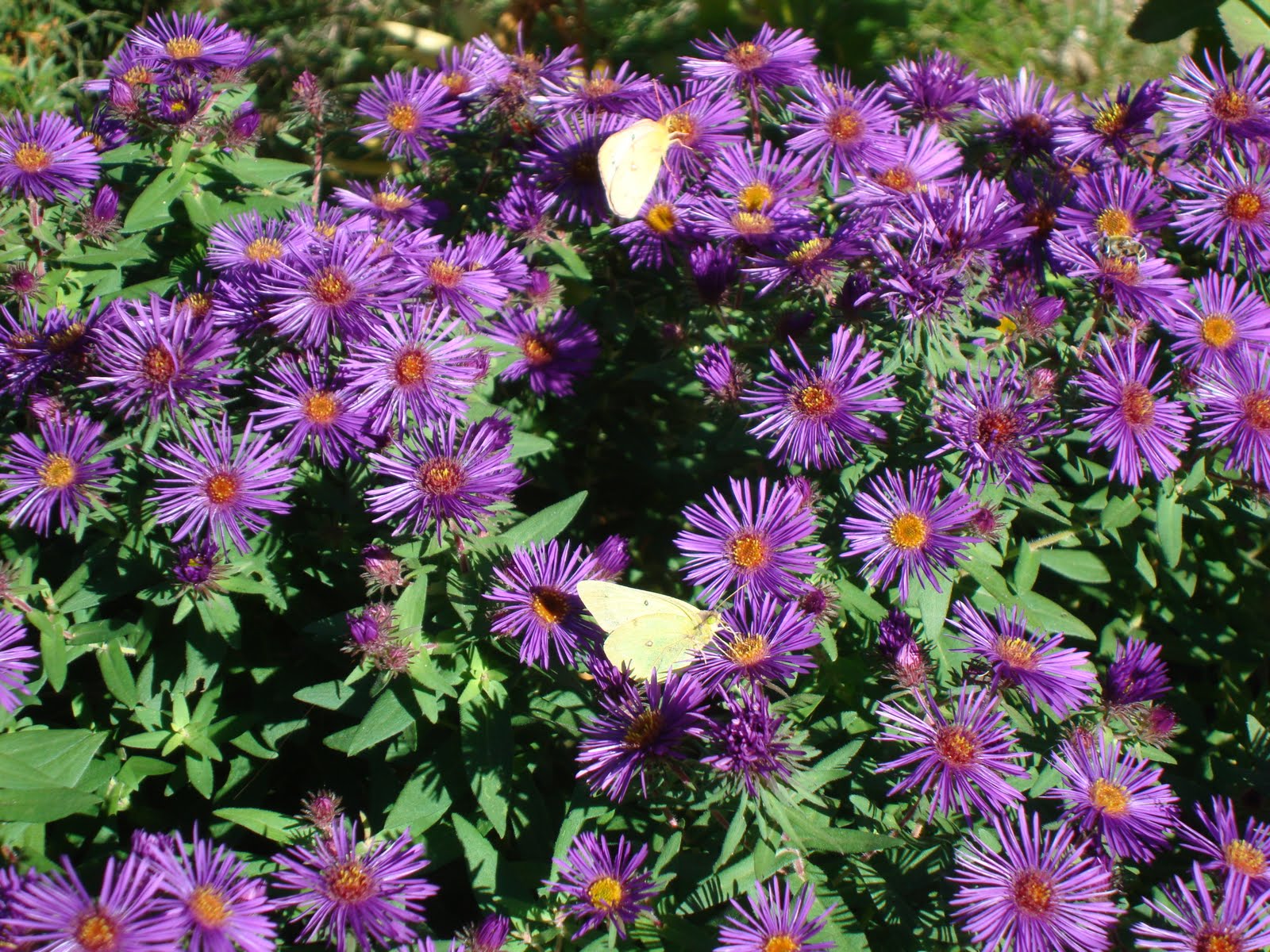
Wonders abound this time of year in our corner of creation. The rich colors of autumn leaves and grasses are probably the most striking change. The flowers in fields and gardens that are still blooming have their own striking colors. Butterflies, including monarchs, are migrating. The air is crisper than it was even a couple of weeks ago, and the sky seems to be a deeper shade of blue as fall sets in. At night, the fall sky can be amazing.

The practice of wonder at the earth, the heavens, and the mysteries of all of God’s unimaginably vast creation can help us be mindful of the majesty, power, and goodness of the Creator and more caring of God’s creation. Our own part of God’s good creation, this blue-green planet we call home, is in need of care and defenders. Today’s reading from Revelation (Revelation 12:7-12 ) about the war in heaven between Michael and his angels against the dragon and his angels gives us an ideal of the forces of good battling the forces of evil. Our battles against forces that would destroy much of the rich variety of life on earth through pollution, habitat destruction, and greenhouse gas emissions require the same sort of persistence and courage that all battles require. It also requires wisdom, the ability to see both the big picture and the smallest of creatures, and the willingness to learn and adapt. Along with calling us to wonder, Michaelmas can call us to renew our commitment to fight for a sustainable environment for all living things.

While we are observing Michaelmas today, our Jewish brothers and sisters are observing Rosh Hashanah, the Jewish New Year and beginning of the High Holy Days. Through the GreenFaith website, I found the post The Binding of Isaac and a Spirit of Optimism by Rabbi Edward Bernstein, a GreenFaith Fellow. Rabbi Bernstein tells how awe of creation and the Creator permeate the story of the binding of Isaac (Genesis 22), one of the biblical texts in the Rosh Hashanah liturgy. Rabbi Bernstein helps us see the dual themes of awe in creation and a call to stewardship of creation in this story. It’s well worth a read, and wonderfully relevant to our own observance this day.

Tuesday, February 15, 2011

Good News for St. Stephen's!

GreenFaith Certification Program


Last October, the Episcopal Church and GreenFaith announced a collaboration to enroll Episcopal parishes in the GreenFaith Certification Program. For parishes successfully completing the application process, GreenFaith provides a two-year program to help the parish become greener and become a leader for other Episcopal parishes across the country and other congregations of any faith locally, while the Episcopal Church provides half of the tuition cost for the parish.

At St. Stephen’s, we brought the proposal to the vestry, formed a Green Team, and completed the application process with a February 1 deadline. Yesterday we learned that our application was accepted! We are the first congregation of any denomination or faith tradition in Nebraska to join the Green Certification program.

We are delighted with this opportunity to learn how to be better stewards of the environment (and better stewards of our finances as utility costs go down), deepen our connection to God through remembering God’s creation in our worship and our study, and to learn how to provide religious environmental leadership in our community. The program strengthens intergenerational relationships within the parish, and this was a big part of our decision to apply for the Certification Program. It’s an opportunity to show our children that we do care about the world in which they will live as adults, to learn and work with them to do the best we can to protect their future and the future of our parish, and to say to them through our actions as a parish that God cares about them and about the world.

GreenFaith and the Episcopal Church have announced a new opportunity for other parishes to join the program with a May 1 deadline. For parishes that might be interesting in joining, there is an informational webinar available tomorrow, February 16, at 2:00. Click here to find out more about the webinar; click here to read the October Green Sprouts post New Green Opportunity for Parishes about the program. If you want to talk about how this might work for your parish or how St. Stephen’s handled the application process, please contact me. I would be delighted to have more parishes in our diocese working toward Green Certification!

Thursday, January 6, 2011

Epiphany

The Green Sprouts blog first appeared two years ago on the Feast of the Epiphany. In our diocese, awareness of environmental issues and efforts to be better stewards of God’s creation have increased over the past two years. As we celebrate the Feast of the Epiphany today and move into the weeks following Epiphany, we talk about Christ’s revelation to the world and about Jesus’ ministry of healing and reconciliation, and also about how we can help bring Christ's healing and reconciliation to the world.

If your parish has taken some steps to practice better environmental stewardship or to educate your parish or your community about environmental issues, if you have begun advocacy around an environmental justice issue or found ways to enrich your worship through connections to the natural world, please send a note to deaconbetsy@windstream.net so we can share what you are doing with other parishes in the diocese. In the coming weeks, I’ll be sharing how things unfold at St. Stephen’s as we apply for the GreenFaith Certification Program and, if our application is accepted, begin doing the work to complete the program and become designated as a GreenFaith Sanctuary. (See the 10/14/10 post New Green Opportunity for Parishes for more about the program.)

Meanwhile, as we celebrate Epiphany, remembering the wise men following the star and Christ being revealed to the world, the last paragraphs of that first Green Sprouts post articulated some of the reasons for us to pay more attention to God’s creation and to be intentional about caring for the environment:

People who pay attention to the sky, the changing seasons, the incredible variety of life on our planet Earth, often experience joy and wonder and wholeness. Spending time outdoors paying attention to God’s creation leads us to open our hearts in gratitude. We don’t need to be able to name these experiences as ‘God’ for them to have a deep effect on us, and for us to know they point to something more. Those of us who do use traditional religious language describe such experiences as ways to connect with God. Being outdoors and taking the time to look around and listen is one of the most accessible doors or openings to the Holy. Such experiences not only give us a sense of God’s presence, but they often change us in profound ways.

As we talk about the light of the Epiphany star and connect it to the light of Christ in the world, the hours of daylight in the northern hemisphere are slowly increasing. On the plains, the angle of the sun and the weather conditions on some days combine to produce beautiful colors in the sky at sunrise and sunset. Cold, clear nights result in starry skies that make it easy to imagine following a special star night after night to see where it leads.

Launching this blog seems to me like a fitting way to mark the Feast of the Epiphany. Environmental issues directly affect the traditional social concerns of the church such as poverty, disease, hunger, and social justice. During Epiphany, the Church talks about bringing Christ to the world, about revealing Christ’s power to bring healing and wholeness. To bring Christ to a world where environmental issues have come to be understood as fundamental to all our economic, social, and political concerns, the Church needs to bring these issues into the center of our conversations and our work.

Saturday, November 13, 2010

Rich in Soul

Annual Council ended today, and from where I sat it looked like an energizing and renewing event for most of us in attendance. The focus on mission “From every family, language, people and nation” was centered on the establishment of a global companion relationship among our diocese and the Dioceses of the Dominican Republic and of Twic East in Southern Sudan.  The theme of mission showed up throughout our meeting, though.

At the Council Eucharist, the processional hymn was “God of grace and God of glory” (Hymn 594). The words “shame our wanton, selfish gladness, rich in things and poor in soul” summarize a large part of the importance of connecting our spiritual lives with a concern for the environment. Habits of over-consumption that harm our planet also harm our souls. “Grant us wisdom, grant us courage, lest we miss thy kingdom’s goal” is a good prayer for us as we consider the church’s role in addressing the environmental challenges of our time.

Thank you to everyone who spoke with me about environmental stewardship during Annual Council! It was exciting to hear about what is happening in some of our parishes and to find others who are enthusiastic about taking care of the Earth. Because of the timing of the environmental stewardship presentation, some folks who were interested in certain resources weren’t able to pick them up at the display before leaving for home, so here are some links:

The brochure about eco-palms is available here from the Center for Integrated Natural Resources and Agricultural Management at the University of Minnesota.


Click here for information about the GreenFaith Certification Program for congregations. Click on this link to Episcopal Life Online for more information about grants available to Episcopal parishes who want to apply for the program. New Green Opportunity for Parishes was an earlier post on this blog about the program.


Someone asked for a list of the books on display; please send me a message if you want that list! I'm also happy to send the page of suggested first steps toward a greener parish to anyone who wants a copy.


And for those who liked the story about the treasures we discovered during our October 10 clean-up, the post about that, Grace, is here


"Save us from weak resignation to the evils we deplore...Grant us wisdom, grant us courage, serving thee whom we adore."


Thursday, October 14, 2010

New Green Opportunity for Parishes

GreenFaith and the Episcopal Church have announced a collaboration to enroll Episcopal churches in the GreenFaith Certification Program. The program provides resources and structure for parishes to become greener and to provide leadership to encourage other congregations to become better stewards of the environment. Thirty Episcopal congregations will receive subsidies covering 50% of the cost of the program.

Details about the program are available in the articles Innovative partnership aims to help Episcopal churches ‘go green’ from Episcopal News Service and GreenFaith and the Episcopal Church Announce Environmental Collaboration on the GreenFaith website. 

GreenFaith is offering free webinars so for church leaders who want to learn more about this opportunity.  The hour-long webinars will be on:

  • Monday, Oct. 18, 7:00 pm and 9:00 pm ET  (6:00 and 8:00 Central time)
  • Thursday, Oct. 21, 12:00 noon and 3:00 pm ET ( 11:00 am and 2:00 pm Central time)
 Recordings of the webinars will be available on-line.  To register for a webinar, contact Stacey Kennealy, Director of the Certification Program, at skennealy@greenfaith.org


Monday, April 27, 2009

Recovering Greenness


Today’s reading (April 27) from Forward Day by Day ended with these lines from George Herbert’s poem “The Flower”: “Who would have thought my shriveled heart / Could have recovered greenness?”

The past couple of weeks have brought much to feed our souls: a couple of lovely April days, flowering trees, and Earth Day’s reminders both of the wonder of God’s creation and of the heartening increase in environmental consciousness. Just this evening, news is being posted about today’s meeting in Washington to lay the groundwork for a United Nations agreement among the top greenhouse gas polluters to work on slowing or reversing climate change – a step forward.

On the other hand, the past couple of weeks have also brought news of the spread of a new kind of flu, continuing concern about the economy, and Earth Day’s reminders of the severity of the climate crisis and of the effects of pollution on humans and other living things. The less pleasant news seems like enough to shrivel our hearts, while the beauty and wonder of creation and the way our bonds with the Earth pull us toward better stewardship pull us in other direction, to what this 17th century Anglican clergyman and poet called “greenness”.

Late Sunday afternoon I did a little puttering in my garden despite the cool weather. The point wasn’t really the transplanting I was doing, but spending some time outdoors close to the dirt where I could hear the birds singing and see and smell some spring flowers. I had been paying attention all day to the news about the flu virus, and had read Andrew Revkin’s post “Contagion on a Small Planet” on Dot Earth. This post, referencing a Food and Agriculture Organization paper, mentions “the ongoing disruption of ecosystems” as a factor in the creation of “a global commons of disease risk”. The environment, the economy, and this latest health concern are, of course, interconnected, as all things are. As I dug a hole for some creeping phlox, I reflected on how “the environment” both weighed heavily on my mind and provided just the remedy to keep this weight from becoming so heavy as to keep me from acting.

Our Catechism teaches that sin is seeking our own will instead of God’s will, “thus distorting our relationship with God, with other people, and with all creation.” (BCP, p. 848). A return to wholeness requires the restoration of health to this entire network of relationships. When we are in right relationship with God, other people, and all creation, we have the heart and energy to do God’s work with grateful hearts no matter how difficult and heavy the burdens might be. We recover our “greenness” by tending to these relationships and restoring them.

I had experienced this dynamic of burden and restoration during the week as I read about climate change and pollution and prepared an Earth Day sermon for the Wednesday morning chapel service at Hastings College. In the sermon, I told about the tour of the toxic sites of Newark, New Jersey, that was part of the GreenFaith Fellowship training program, so I spent some time reflecting on what I saw then and how it had affected me – more heart-shriveling stuff. But a lot of my reading and writing this time of year is done outside on my kitchen porch. My small yard, the neighboring trees, and the sky provided plenty of wonders to help me recover greenness: bright yellow goldfinches flying in their up-and-down pattern to come get some seeds at the feeder, a pair of golden eagles making an occasional appearance in the sky and a nearby tall tree, baby squirrels learning how to get around in the tree where they were born, a flock of gulls passing over.
And, of course, there were spring flowers, which George Herbert took as a sign of the return of greenness to our hearts and souls as well as to the earth. “The Flower” begins with these lines:

How fresh, oh Lord, how sweet and clean
Are thy returns! even as the flowers in spring;
To which, besides their own demean,
The late-past frosts tributes of pleasure bring.
Grief melts away
Like snow in May,
As if there were no such cold thing.

Who would have thought my shriveled heart
Could have recovered greenness?

Monday, March 30, 2009

Early Spring Abundance


Spring officially began a little over a week ago, and in that short time there has been an abundance of blessings pertinent to creation care for Nebraskans. All of these events took place against a backdrop of typical spring weather, with cold, cloudy, and even snowy weather alternating with sunny days that helped the earliest spring flowers to bloom. A variety of songbirds, including robins, wrens, meadowlarks, and red-winged blackbirds, are making it sound like spring even when the temperature feels more like winter. Here’s a glimpse at some pieces of that abundance.

Dinner in Abraham’s Tent
The Episcopal Diocese of Nebraska has partnered with Temple Israel and the American Institute of Islamic Studies and Culture to form the Tri-Faith Initiative. Friday evening at the Qwest Center in Omaha was Dinner in Abraham’s Tent: Conversations on Peace. It was a wonderful evening to share our worship experiences, make new friends, and hear an outstanding conversation about peace.

The spirit of this event was very much like the spirit I’ve experienced at GreenFaith gatherings. GreenFaith is an interfaith organization that “inspires, educates and mobilizes” people of different faiths for environmental leadership. In working with GreenFaith in their Fellowship program, I’ve found that working on creation care can build bonds among people of different faiths and different Christian perspectives. All of us recognize the Earth as God’s creation, all of us feel closer to God when we experience the wonders of creation, and all of us realize that we have a moral responsibility to help care for God’s creation.

As I described my ministry to our dinner companions on Friday evening, there seemed to be an understanding that creation care would be something that people of faith should be doing. As we Episcopalians become more aware of how environmental issues fit into our religious lives, we might very well find a strong common bond with people of other faiths who are also beginning to recognize the connection between faith and the environment.

Crane Sunday at St. Stephen’s, Grand Island
Our liturgical celebration of the crane migration on March 22 went well. Parishioners brought in beautiful paintings and photos of the cranes to share; we had a crane banner and many, many origami cranes in the church itself; our music director tailored the music to the occasion; a parishioner worked with Rowe Sanctuary to provide a fact sheet about cranes that we included with the bulletin. The sermon articulated some of the connections between this migration that marks the Earth season and what is happening in our liturgical season. People seemed very pleased that we recognized the experience of the crane migration as a spiritual experience.

A Pastoral Letter
Right before the first day of spring – but after the last Green Sprouts post – the House of Bishops issued a pastoral letter. It starts out talking about the world financial crisis, then goes on to link it to the environmental crisis. The Bishops say that God is calling us to repentance for our preoccupation with internal affairs and for our narrow focus that has kept us from addressing the concerns of suffering people in our own country and around the world. It’s a remarkable and timely letter, one that speaks clearly about the links between environmental concerns and traditional justice concerns.

Extra bits
Posts to this blog have been biweekly. The plan is to continue regular posts on alternate Tuesdays, but also to supplement these longer posts that often center on the liturgical cycle or the Earth season with “extra bits” as they come along. These will be posts about recent events, or highlighting items culled from the abundance of material related to religious environmentalism -- items such as the letter from the House of Bishops, or environmental news such as the recent report that one-third of all bird species in the United States are endangered. (The report is hopeful since it tells about some things we all can do to help these species survive.)