Monday, October 11, 2010

Grace

10/10/10 Work Party

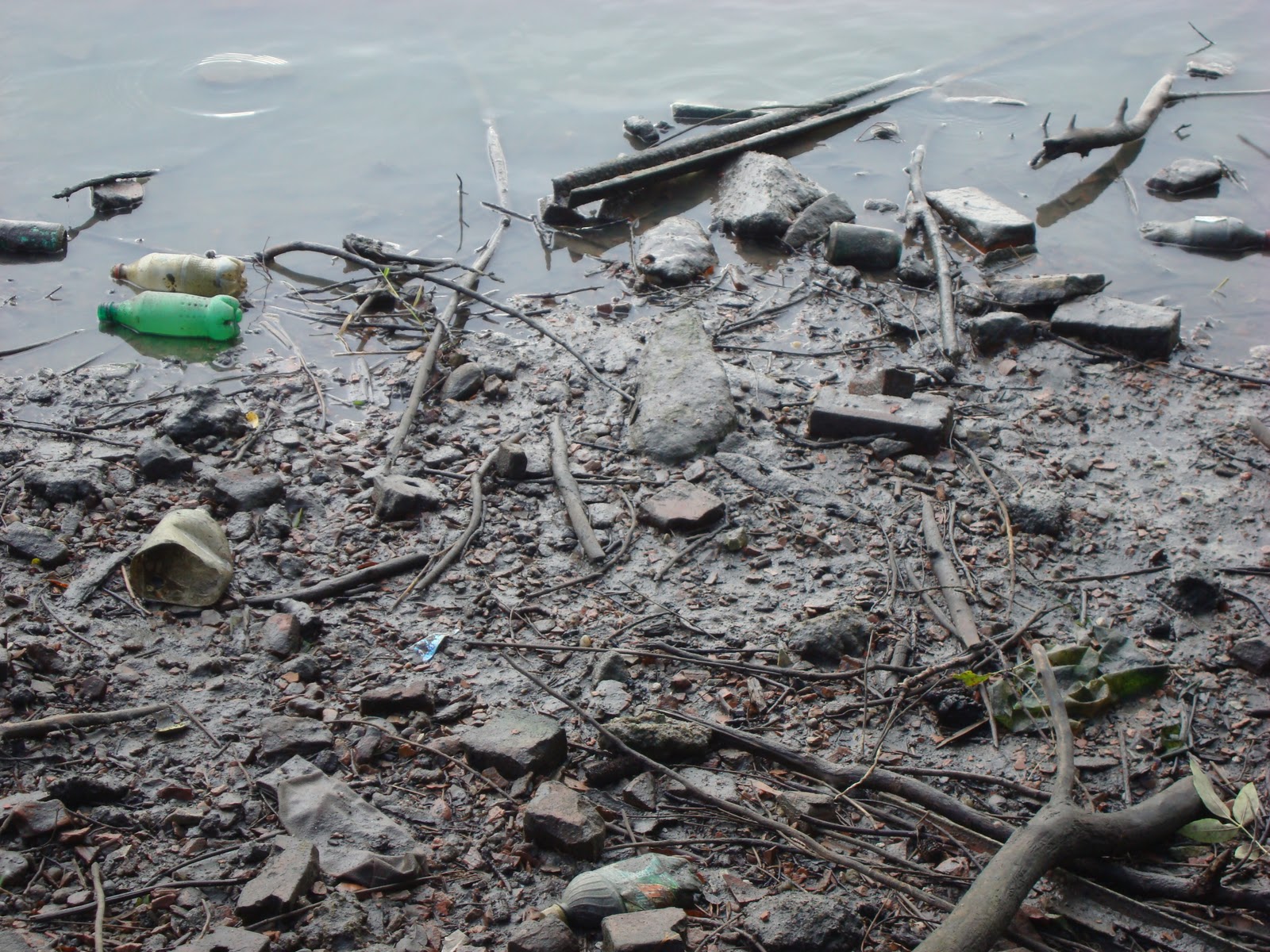
“Look what I found!”  A small but congenial group had gathered at Lake Hastings today for a WDWT (Walking, De-Trashing, Worshiping, and Talking) Celebration, our contribution to the worldwide 10/10/10 environmental work parties coordinated by 350.org today. Because of repairs being done on the dam at Lake Hastings, the water level is down, exposing sand and lots of things buried in the sand. We were finding lots of glass, many plastic drinking straws and cup lids, remnants of plastic bags, and other such pieces of trash that one would expect to find.

My unexpected find was an unbroken half of a large mussel shell.  I’ve found pieces of shells along the lake recently since the water level was lowered, and even a couple of smaller unbroken halves, but this one is six inches long with a lovely mother of pearl lining.

As I approached my friend Karen with my treasure, she held up something on a chain and said, “Look what I found – a crucifix!” Karen had seen a little bit of the chain sticking out of the sand; when she pulled on it, she found a closed circular chain with a crucifix that was crusted with dirt, rust, and sand.

We had two parts to the work party: walking and picking up trash was the first part, and the second part -- keeping in mind that liturgy is the work of the people -- was a time for group reflection and a short liturgy from the National Council of Churches Eco-Justice Program called The Poverty of Global Climate Change, a reminder that people living in poverty are hurt first and worst by climate change.

While walking we took note of the things around us this pleasant autumn day for which we were grateful, then shared some of those things when we got back together. I shared my joy in finding a good-sized freshwater shell; it brought back memories of finding shells along Lake Erie as child, and finding one this size was a surprise for me. I also shared my concern about the future of shellfish in the oceans as the amount of carbon in the atmosphere increases and the ocean becomes more acidic. (See for example this article  in the Yale Environment 360 digest.) Someone else talked about the contrast between the apparent beauty of the lake and the shards of glass and other trash we found as we looked more closely. She said it’s easy to avoid looking at the dangerous things in our world and to pretend everything is fine.

The encrusted crucifix is another cause for gratitude; it seems like a good symbol for this day when we set out in Christ’s name to do a little bit to help repair God’s creation. Finding the crucifix was a reminder of the grace we find when we are willing to look at the world around us, at both its joys and its sorrows, and to serve as the Body of Christ to see and know those needs, to name the truth of those needs, and bring help and healing.

I brought the crucifix home and have been soaking and cleaning it for several hours. Sometime mid-evening, I realized there was some sort of inscription on the back, and now just enough letters have emerged to make it possible to decipher the message: Christ is counting on me.

Saturday, October 9, 2010

10/10/10 and Gratitude

Tomorrow is the day when people all around the world will participate in work parties to show our common concern that we get to work on solving the problem of climate change. This week Episcopal News Service described the plans of several parishes around the nation for this day under the headline Episcopalians join 10/10/10 global work parties. 

As of 5:00 Central time today, 350.org reports that 7189 events are planned in a total of 188 countries. Events are planned in every state in the United States and in every province and territory of Canada. In our diocese, Young Adult Episcopalians and Green Sprouts are ready for WDWT, our Walking, De-Trashing, Worshiping, and Talking Celebration , which begins at 2:00 at Lake Hastings on the north side of Hastings.  People in Omaha and Lincoln who don’t want to travel west can find multiple events from which to choose by searching 350.org’s 10/10/10 site  .

Tomorrow’s Gospel reading, Luke 17:11-19, reminds us that it’s important to be grateful for the gifts God gives us. Part of the WDWT event will offer an opportunity to notice the gifts around us and to give thanks for them. People participating in other events might want to do the same as we work outdoors tomorrow. And if you can’t participate in any of the planned 10/10/10 work parties, prayers of both petition and thanksgiving for the earth would be a good way to be part of the day. 


Wednesday, October 6, 2010

WDWT on 10.10.10

Walking, De-Trashing, Worshiping, and Talking Celebration

Young Adult Episcopalians in Nebraska and the Green Sprouts environmental stewardship group are working together for a healthy and sustainable environment this Sunday. Sunday’s date is 10.10.10. Several environmental groups, with 350.org in the lead, have designated 10.10.10 as a Global Work Party day. The idea is for people at the grassroots level around the world to get to work on the environment, hoping that the sight of thousands of grassroots work parties will inspire people in power to put more effort into working for a sustainable environment. As of yesterday evening, there were 6391 events planned in 187 countries. 

We plan to meet at Lake Hastings (on the north side of Hastings) at 2:00. Trash bags will be on hand, as will work gloves if you don’t have your own. From Lake Hastings, we will walk in small groups, picking up trash and also observing some things around us. When we come back together, we will have some time for worship and reflection, then share some snacks and conversation.

For folks in the eastern part of the diocese who can’t get to Hastings in the afternoon, the 350.org website can give you details of several events in Lincoln and Omaha.

Details about WDWT are available on this page of the 350.org website, or on event pages on Facebook created by Young Adult Episcopalians in Nebraska  or Green Sprouts.


Monday, October 4, 2010

St. Francis: Joy and Compassion

St. Francis found joy in all of creation, and this St. Francis Day in Nebraska is the sort of beautiful October day that makes it easy to rejoice in creation along with Francis. Nights are cold and crisp, while clear blue skies bring the sun's warmth during the day. I’ve seen humans and other animals basking in the sun, catching all the warmth we can before cooler days set in.

Several parishes have a tradition of blessing the animals – dogs, cats, hamsters, and sometimes more exotic creatures -- either at a separate service today or during Sunday services. We enjoy stories about St. Francis and the animals, and appreciate the reminder that God loves our animal companions just as we do. Francis loved not only the animals, though, but all of creation. Perhaps we should bless our chrysanthemums and cottonwood trees and our rocks and roses along with the animals.

Francis expressed this joy in his Canticle of Creation, sometimes known as the Canticle of Brother Sun. We Episcopalians know this canticle as Hymns 406 and 407, “Most High, omnipotent, good Lord”.

Joy in creation is one strand of the life of St. Francis. An equally strong strand is his teaching of compassion for the poor. The Old Testament reading appointed for the Feast of St. Francis, Jeremiah 22:13-16, is about humility. It reminds us that God is more interested in justice and righteousness, in how we treat the poor and needy, than whether we are able to have luxurious homes. The two strands are easily intertwined, as finding joy in the everyday wonders of creation opens our hearts to compassion for all creatures, including our sisters and brothers in the human family.

Joy in God’s creation and compassion for the poor are two elements of environmental stewardship. We work for a sustainable environment because we know the poorest people in the world usually suffer first and worst from any sort of pollution or climate change, but we also work for a sustainable environment so that we can preserve those animals and plants and places through which we encounter God in God’s creation.


Blessed St. Francis Day! Enjoy the beauty of creation and the sunshine!


Thursday, September 23, 2010

If only we had known...

Coral Reefs, the Rich Man's Cry, and the MDGs

“Ensure environmental sustainability” is the seventh of the Millennium Development Goals (MDGs) . Ensuring environmental sustainability and the other goals are all pieces of addressing extreme poverty in our world. A sustainable, stable environment is key to the other goals: to ensuring access to clean water, to fighting diseases such as malaria, and to making it possible to grow food and have plentiful supplies of fish. Climate instability in the form of more extreme floods, droughts, and severe storms both exacerbates poverty and makes the effects of poverty even more severe.

Yesterday the UN concluded a summit on the MDGs, a summit that many in the Episcopal Church followed with interest because of our 2003 commitment  to endorse and support these goals.  Devon Anderson and Bishop Ian Douglas of Episcopalians for Global Reconciliation released a statement exhorting us to prophetic action on behalf of the MDGs – on behalf of the people whose lives hang in the balance – pointing out that where secular leaders run into political problems at home if they push for the sort of effort it will take to reach the goals by the target year of 2015, the church is freer to act.

Against this backdrop and with this Sunday’s Gospel, the story of the rich man and Lazarus, in mind, news this week about the plight of coral reefs illustrates why Christians should be especially concerned about environmental issues and what unique perspective the church has in all of this.

On Monday, the New York Times under the headline Extreme Heat Bleaches Coral, and Threat Is Seen reported that the extreme heat so far this year is affecting coral in various locations “from Thailand to Texas”. The coral’s bleaching indicates that it is going into a sort of survival mode. If the stress continues long enough, the coral dies. A report yesterday from NOAA says that coral bleaching is also likely in the Caribbean this year.

Coral reefs are an essential part of ocean ecosystems; coral reefs provide habitat for other living things, including fish. The NOAA report explains that the decline and loss of coral reefs throughout the world “has significant social, cultural, economic and ecological impacts on people and communities.” As the New York Times article points out:  “In dozens of small island nations and on some coasts of Indonesia and the Philippines, people rely heavily on reef fish for food.”

As the atmosphere and oceans get warmer, people who rely on reef fish for food will have less to eat.  As governments and peoples fail to address climate change, there are real consequences for real people. Aid programs have long operated on the principal that it’s better to teach someone to fish than simply give someone a fish, but if there aren’t any fish to be caught, it’s an entirely different situation.  People who live in island nations and along coastal areas already know how to fish; a sustainable environment would continue to make fish available.

Some folks say that it’s difficult to care enough to act when we don’t actually see the people who suffer from our inaction.  Certainly most of us are more compelled to help someone suffering right in front of us than unknown people we don’t see or know. But this inclination doesn’t determine our actions; we have the ability to think and understand the ways our actions affect others. The fact that a gut reaction spurs us to action more quickly than does a reaction that originates in our understanding doesn’t excuse us from acting.

The rich man in the Gospel story begs Abraham to send Lazarus to warn his family of the consequences of living selfishly and ignoring the invisible poor. Jesus has Abraham give this reply: “If they do not listen to Moses and the prophets, neither will they be convinced even if someone rises from the dead.”  They already had the information they needed to do the right thing but found reasons not to act; more information would only generate more excuses.

This story suggests an image of us middle class Americans sometime in the not so distant future realizing what our inaction has done to the Earth and its inhabitants, wishing that someone from the future could have come to us in 2010 when every other issue – religious, political, or personal -- seemed more important than climate change. If only someone had told us what was happening, if only we had known…

But we do know. We have incredible access to news reports and scientific reports, to books and videos; we have lots and lots of information. We have Moses and the prophets and the Gospel; we have the leadership of the Episcopal Church encouraging us to act. Yes, it’s overwhelming sometimes; yes, it takes some effort to look beyond our own daily lives; but Jesus calls us to lay aside our excuses and act out of love.

Thursday, September 16, 2010

God and Wealth

All God’s Children was a post on this site a little over a year ago. It talked about the hope that a climate bill could be passed yet that fall before the Copenhagen Climate Conference in December, and talked about the reason Christians should be concerned about the passage of a climate bill or the chances of a significant agreement being reached at Copenhagen: the effects of the carbon that we as a wealthy nation produce will be for the most part be felt first and the worst by some of the poorest people in the world.

A year later, the United States Congress has still not passed a climate bill, and little progress was made at Copenhagen.  Last year’s hopes were not fulfilled.  One of the principal reasons Congress hasn't moved on climate legislation is that fear of immediate negative economic effects keeps us from seeing the long-term positive effects of climate legislation. Even people who understand the science and have concern for those who stand to suffer the soonest from climate change shy away from effective action if they think their own costs for energy or taxes might go up.

“You cannot serve God and wealth,” says Jesus at the end of this week’s Gospel lesson (Luke 16:1-13).   The lesson from Amos is similar: God sees people who observe the letter of the Law, but who care more for their own wealth than they do for the poor; they “trample on the needy”, selling them out for silver or even for a pair of sandals.

That post a year ago ended with this: “We have much to gain for ourselves by turning to new energy technologies and capping our carbon output, and, just as importantly, we have much to gain for the poorest people with whom we share the Earth.”  Our immediate economic concerns and fears keep us not only from caring enough about the poorest people in our world, but also from seeing where our choice to ignore climate change will leave us in the long-run.

A year from now, our Gospel text from Matthew 20 will end with Jesus saying, “So the last will be first, and the first will be last.” What will we be able to say next September about our consideration for our poorest brothers and sisters?


To see what Episcopal Relief and Development is doing to respond to the record flooding in Pakistan, click here. 

To donate to ERD’s relief efforts in Pakistan or other places affected by natural disasters, click here

Thursday, September 9, 2010

Jeremiah and the Monarch

Proper 19C

“A hot wind comes from me out of the bare heights in the desert toward my poor people…I looked on the earth, and lo, it was waste and void…I looked, and lo, there was no one at all, and all the birds of the air had fled. I looked, and lo, the fruitful land was a desert.”

These words are from Sunday’s lesson from Jeremiah 4, one of the Revised Common Lectionary lessons for this coming second Sunday in September. This week coincides with the fall migration of monarch butterflies in Nebraska.  This migration doesn’t get as much attention in central Nebraska as does the spring migration of the sandhill cranes, but most years it is a marvelous event to observe.  The butterflies traveling from Canada to Mexico are not the individuals that left the forests of Mexico to fly north; these butterflies are at least a couple of generations removed from those, yet these fall butterflies find their way back to the ancestral winter home. The size and seeming fragility of these beautiful creatures makes their long journey all the more amazing!

Tuesday morning I found a monarch butterfly resting on the screen door between our kitchen and the porch where I sometimes eat breakfast. The butterfly stayed where it was, occasionally opening its wings, while I ate breakfast and snapped some photos of it. After breakfast, while I was reading the Daily Office and also looking ahead to the lessons for Sunday -- including this passage from Jeremiah -- it was still keeping me company.  

It was still there when I had to leave; by lunchtime, it was gone. I looked at my photos of this single butterfly and started watching for more monarchs. According to Monarch Watch from the University of Kansas, we should be beginning the peak monarch migration period for Nebraska; in my 25 years in Nebraska, I’ve learned to watch for the monarchs in early September. The year I had a garden bed full of tithonia (Mexican sunflowers) I couldn’t count the number of butterflies hanging on the plants over Labor Day weekend! Most years, once we spot the first one, there are usually several more passing through that day. When no more came along Tuesday or Wednesday, I started to wonder where the others were!

Monday’s Lincoln Journal Star  carried an AP story  about backyard volunteers helping to track numbers of fireflies in North America; the Journal Star’s headline for the story was “Are fireflies on the verge of just fading away?”  Remembering that headline, I became more curious about what we might know about the monarchs.

Milkweed: the breakfast of larval survivors
There is indeed concern about the monarchs. They are one of the World Wildlife Fund’s endangered species   A USA Today article from last March, “Monarch butterflies, battered by weather, no longer rule”   talks about severe weather in the form of hailstorms and heavy rains in their winter home taking a toll before the northward migration even started.  It quotes Lincoln Brower, a monarch specialist at Sweet Briar college, listing three specific environmental pressures on them: 1) illegal logging in Mexico that has destroyed some winter habitats for monarchs, 2) severe weather caused by climate change, 3) fewer milkweed plants in the Midwest because of herbicide use on corn and soybean fields (the larvae eat only milkweed).  A July population update on the Monarch Watch blog  sounds a hopeful note that the population might recover some; one factor is that heavy rains in Texas this year have increased the number of milkweed plants there.

I hope to see more monarchs in the next few days, and to see them again next year and all the years after that. It’s very difficult to imagine that the day could come in our lifetimes when they would no longer show up in Nebraska in September. But we haven’t cared very well for God’s creation, and there are natural consequences to that lack of care. As a nation, we continue to ignore climate change, allowing lawmakers to get away with dodging this difficult issue and failing to figure out ways to reduce greenhouse gas emissions. As a people, we continue to focus on short-term economic goals without thinking about the effects of resulting changes of habitat and climate on creatures like butterflies.

The words I read from next Sunday’s Jeremiah passage while sitting with this lone butterfly still speak to us today. Jeremiah was speaking about the approaching invasion of Judah; he spoke of the invasion and the desolation of the land as judgments of God against God’s disobedient people. The environmental pressures on butterflies and other living things on the Earth aren’t a judgment or punishment meted out by God, but the natural consequence of our failure to care for the Earth as God commands us to do. God doesn’t need to make our land desolate to wake us up; we are already doing that.  Earlier in this chapter from Jeremiah, we find this (Jeremiah 4:9): “On that day, says the Lord, courage shall fail the king and the officials...”  The king – the monarch -- in Jeremiah’s time ignored all the prophetic warnings; when the time came to act, courage failed the leaders. Our leaders seem to be ignoring the warnings from the scientific community, and seem to lack the courage to lead us in addressing global warming.

Sunday’s Gospel lesson (Luke 15:1-10) reminds us that every single human being is important to God; God cares very much what happens to each one of us. Surely the God who cares for all of us, the God who cares for the birds of the air and the lilies of the field, cares about what happens to the butterflies.