Thursday, September 29, 2011

Michaelmas and Wonder in Creation

(Rosh Hashanah, Too!)

Today was the Feast of St. Michael and All Angels, also known as Michaelmas. Traditionally, Michaelmas has marked the divide between late summer and fall – hence the British ‘Michaelmas term’ for what we would call ‘fall semester’.

The angels described in the Bible are different from the cute angels of popular culture. Something about Biblical angels makes it necessary for them to say, “Fear not!” when they appear to humans. Exactly what sorts of creatures these are is hard to say; exactly what the word ‘angel’ represents is at least in part a mystery to us. But they are creatures, part of God’s creation. Because today celebrates all angels, it’s in part a celebration of those mysteries in creation that are beyond our understanding. With the change in seasons and a reminder of the wonder and mystery of creation, Michaelmas is a good time to renew our own sense of wonder at God’s creation.

Today’s meditation in Forward Day by Day says that today’s observance calls us to “remember the vastness of God’s creation in which angels and archangels fill the heavenly court.” The writer adds:

We inhabit a cosmos greater than anything we can imagine, yet all is within the reign of God. To remember this is to grow in awe, trust, and hope in God’s purpose.
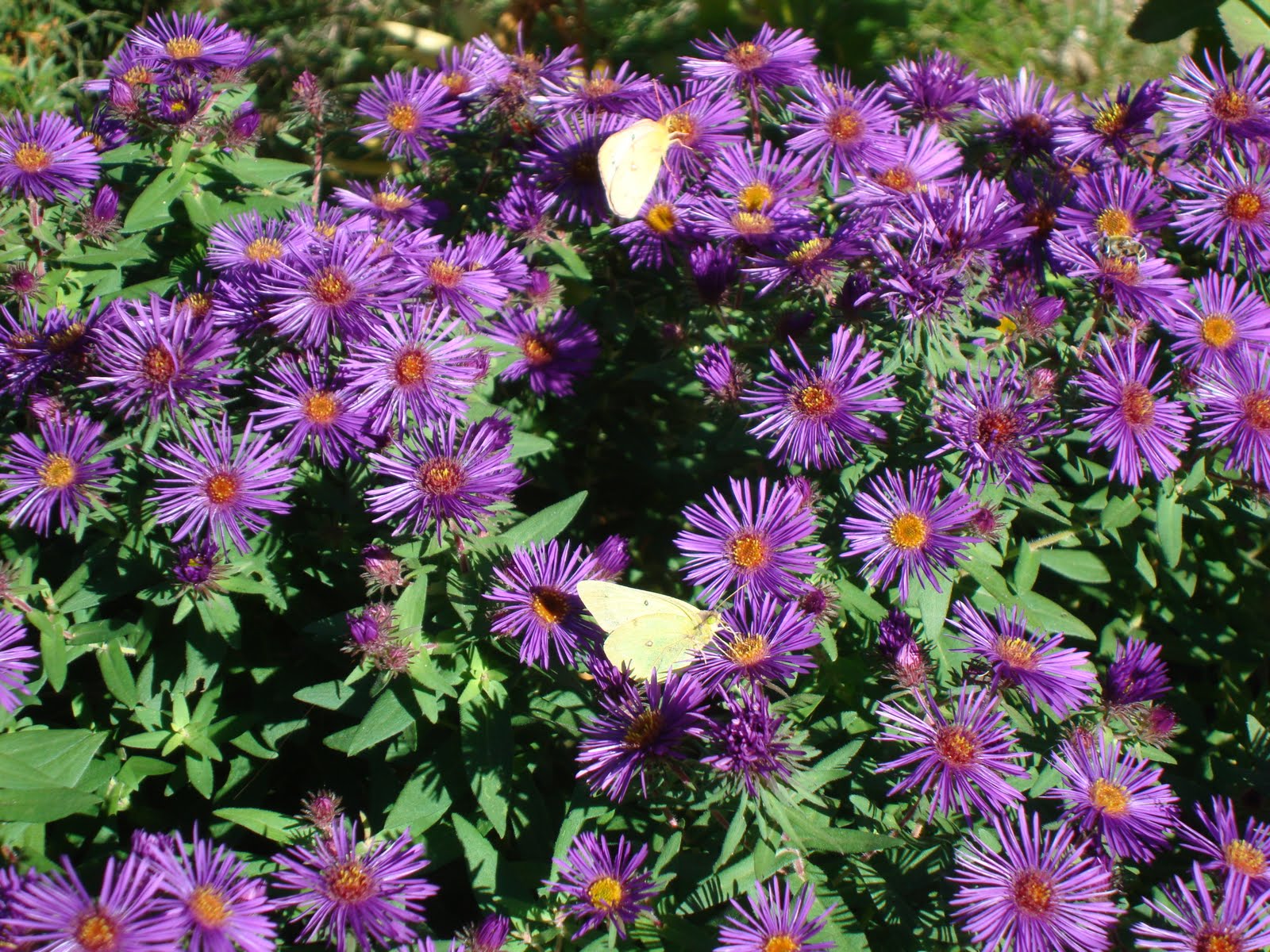
Wonders abound this time of year in our corner of creation. The rich colors of autumn leaves and grasses are probably the most striking change. The flowers in fields and gardens that are still blooming have their own striking colors. Butterflies, including monarchs, are migrating. The air is crisper than it was even a couple of weeks ago, and the sky seems to be a deeper shade of blue as fall sets in. At night, the fall sky can be amazing.

The practice of wonder at the earth, the heavens, and the mysteries of all of God’s unimaginably vast creation can help us be mindful of the majesty, power, and goodness of the Creator and more caring of God’s creation. Our own part of God’s good creation, this blue-green planet we call home, is in need of care and defenders. Today’s reading from Revelation (Revelation 12:7-12 ) about the war in heaven between Michael and his angels against the dragon and his angels gives us an ideal of the forces of good battling the forces of evil. Our battles against forces that would destroy much of the rich variety of life on earth through pollution, habitat destruction, and greenhouse gas emissions require the same sort of persistence and courage that all battles require. It also requires wisdom, the ability to see both the big picture and the smallest of creatures, and the willingness to learn and adapt. Along with calling us to wonder, Michaelmas can call us to renew our commitment to fight for a sustainable environment for all living things.

While we are observing Michaelmas today, our Jewish brothers and sisters are observing Rosh Hashanah, the Jewish New Year and beginning of the High Holy Days. Through the GreenFaith website, I found the post The Binding of Isaac and a Spirit of Optimism by Rabbi Edward Bernstein, a GreenFaith Fellow. Rabbi Bernstein tells how awe of creation and the Creator permeate the story of the binding of Isaac (Genesis 22), one of the biblical texts in the Rosh Hashanah liturgy. Rabbi Bernstein helps us see the dual themes of awe in creation and a call to stewardship of creation in this story. It’s well worth a read, and wonderfully relevant to our own observance this day.

Thursday, September 22, 2011

Pastoral Teaching on the Environment


While meeting in Quito, Ecuador, the House of Bishops of the Episcopal Church issued a Pastoral Teaching about the environmental crisis, saying:

We, your bishops, believe these words of Jeremiah describe these times and call us to repentance as we face the unfolding environmental crisis of the earth:
How long will the land mourn, and the grass of every field wither? For the wickedness of those who live in it the animals and the birds are swept away, and because people said, "He is blind to our ways." (Jeremiah 12:4)

This is a powerful document, bringing together Scripture, science, spiritual practices, and the Church's traditional concern for the poor and the suffering. It is something to read carefully (click here for the full document), something to pray, something to consider when choosing our actions in our daily lives in the world and in our private spiritual practices. It calls us to make changes on a deep level, to repent:

Our current environmental challenges call us to ongoing forms of repentance: we must turn ourselves around, and come to think, feel, and act in new ways. Ancient wisdom and spiritual disciplines from our faith offer deep resources to help address this environmental crisis. Time-honored practices of fasting, Sabbath-keeping, and Christ-centered mindfulness bear particular promise for our time.

This pastoral teaching will enrich the conversation about creation care for Episcopalians and others in the coming months and years. If we study it and act on it, we may indeed find the hope of this document fulfilled:

May God give us the grace to heed the warnings of Jeremiah and to accept the gracious invitation of the incarnate Word to live, in, with, and through him, a life of grace for the whole world, that thereby all the earth may be restored and humanity filled with hope.

Wednesday, September 21, 2011

Pipeline and Pie at St. Stephen's

Tomorrow evening is the forum about the proposed Keystone XL pipeline (aka Pipeline and Pie) at St. Stephen’s in Grand Island. This event is organized by the Green Team at St. Stephen’s as part of our stated mission: Drawing on Nebraska’s traditions of conservation and moved by Christian hope and purpose, we will engage in whatever learning, actions, and practices make us more caring stewards of God’s creation and better neighbors to the world’s other inhabitants.

As part of our work, we are trying to stay informed about the pipeline and the concerns that have been raised about it. The Rev. Dr. Kenneth Moore, Regional Minister of the Christian Church (Disciples of Christ) in Nebraska and Board Chair of Nebraska Interfaith Power and Light, will speak about why the issues around the proposed pipeline matter to people of faith. Jane Kleeb of BOLD Nebraska will share some general information about the proposed pipeline – what it is, what it would carry, where it would be built – and some of the concerns about the pipeline and its proposed route through the Sandhills and over the Ogallala aquifer. Randy Thompson, whose land is in the path of the proposed pipeline, will talk about his concerns as a landowner and conservationist. We will have time for questions and will continue our conversation over pie and coffee.

The St. Stephen’s Green Team is working toward GreenFaith certification for the parish, which includes a growing point for us: paying attention to environmental justice issues. The Episcopal Church and GreenFaith recently announced the beginning of a new cycle of the certification program in which Episcopal parishes can apply for subsidies to offset part of the cost of the program. Michael Schut, the economic and environmental affairs officer for the Episcopal Church, explains that the goals of the certification program include “supporting the development of faithful, strong environmental leadership; helping congregations learn to reduce their operating costs; and modeling creation care, spirituality and justice throughout a congregation's life and practice.”

Anyone with an interest in the Keystone XL pipeline (or in some good pie and conversation) is welcome to join us tomorrow evening at 7:30. Please come in through red doors on Cedar Street.

Tuesday, September 6, 2011

Perceptions of Limits

Paul, Disability, and the Environment

Today’s Forward Day by Day reflection on Philippians 1:12-30 is about Paul in prison. It talks about Paul’s faith being steadfast and fruitful despite his circumstances. The reflection ends making the sound point that no matter what our circumstances, we “have all been made alive”, created anew.

In the course of making this point, though, the writer says that some of us are “confined to wheelchairs”. This all too common phrase always strikes me as odd, since for someone who can’t walk, a wheelchair is far from something confining; in fact, it’s a way to go somewhere. While a wheelchair may look limiting to someone who can walk around easily, using a wheelchair is a way of accepting a limitation and getting on with living life; it’s a means towards flourishing.

This way of looking at physical limitations is similar to the way we sometimes perceive the limits that the laws of physics and chemistry and biology put on what we can do without making our air, water, or climate unsustainable. If we can’t accept those limits, if we see them as somehow imprisoning us and keeping us from living in accordance with some shallow idea of progress – such as accumulating more things – we will only end up harming ourselves and other living things. If we accept these limits, however, and get on with living, we can flourish. Living in harmony with the laws of nature is no more confining than using a wheelchair!

To check out my thoughts about the wheelchair analogy, I wrote to our son, Andrew Blake Bennett, a doctoral student at Syracuse University in Cultural Foundations of Education specializing in disability studies. Andrew did more than answer my question; he wrote his own reflection, asking some good questions that apply equally to the way we think about disabilities and the way we think about environmental stewardship. He points out ways the church has thought about disability, which parallels the way we have thought about nature and the perceived need to dominate or “tame” it. I thank Andrew for permission to use his reflection in its entirety.

The writer of today’s Forward Day by Day series impresses upon the reader that disability such as being “confined to a wheelchair” or “deafness, blindness, pain, etc.” and so forth is an “imprisonment”. Since the meditation is short, one cannot know what exactly the author meant by this, but certainly there is a long tradition, even sometimes within the Church, of equating disability to a limitation. This treats disability as something that is something horrible and limiting instead of as something that is a part of the human condition. The social model of disability, on the other hand, considers how society contributes to the idea of disability.

The term 'confinement', therefore, usually ends up having a very temporarily able bodied perspective. It is this way because the medical model, that is a model of seeing disability as a deficit, sees disability as being something that makes a person invalid. Simi Linton notes in Claiming Disability: Knowledge and Identity that this word comes from the Latin invalidus meaning “weak” and ties being a person with a disability to always being a patient, even in non-medical situations where this does not apply (Linton, 1998, pp. 28-29).

Much of this control stems from society wanting the person with a disability to be something else. Linton describes within her book Trembley’s (2006) description of Canadian World War II veterans. Staff wanted these individuals to be able to walk, even though it was much easier for them to propel themselves with wheelchairs. Linton wrote “It is that type of manipulation and control, along with architectural and attitudinal barriers that confine people. It is not wheelchairs” (Linton, 1998, pp. 27-28).

While I agree with the author of today’s reflection as to the main point in the passage, I think the reading would benefit from a closer reading of the text. Even as Paul says that living is in Christ and dying is gain, he also talks about the fruitfulness of the labor of “living in the flesh” (Philippians 1: 22-24). Paul also writes of the privilege of “not only of believing in Christ, but of suffering for him as well – since you are having the same struggle that you saw I had and now hear that I have”. With Paul, of course, there were physical manifestations of struggle and suffering, but in a way, this sense of “suffering” can also mean “witnessing” for God even when concerns would appear to limit us.

Considering that we, as human beings, are all limited in some way or another, how might we “breakthrough” and witness to the things that God calls us to witness to, things like stewardship of the earth, poverty, and upholding the dignity of every human being in its most expansive sense even when we feel limited by practical constraints? The first thing that Christians are called to do is to listen to God. What does scripture tell us to do and how do we apply it to today’s world? What has tradition taught us? In what ways have traditional ways of doing things worked and not worked? Is the tradition reasonable for today’s world? Finally, we must examine how God is speaking in today’s world and consider that to follow where Christ calls us will require creativity and innovation, but also may require sacrifice and a tempering of an individual sense of entitlement for collective benefit. This can be far reaching, everything from how we are designing our cities, towns, and rural communities to how we experience and think about our societal institutions, and, especially, how we, as human beings, think about and experience our neighbor, whether our literal neighbors or far away. Later on, Paul spoke of God’s salvation “enabling you to will and to work for his good pleasure” (Philippians 2: 13). If we allow God to work within us, to be innovative and creative, to speak within us, and to put away old ideas and attitudes, we are capable of more than we ever expected and allow others to also fulfill their potential. Thanks be to God!

Environmental stewardship is not something we do in isolation; it’s interconnected with all our other concerns. When Andrew says “we must examine how God is speaking in today’s world and consider that to follow where Christ calls us will require creativity and innovation, but also may require sacrifice and a tempering of an individual sense of entitlement for collective benefit”, that speaks to our relationships with the earth, water, air, and the earth’s plants and animals as well as our relationships with one another.

Friday, September 2, 2011

Today's News

James 4:13 – 5:6

This is a late night post, looking back on what may prove to have been a pivotal day for Americans who care about the environment. It’s been one of those days where a common theme seems to emerge from a variety of things. Since that theme is related to today’s Epistle reading, I’m sharing this personal reflection both as a thought on one of today’s lessons and as a way of looking at what happened today.

Today’s Epistle reading in the Daily Office lectionary was James 4:13 – 5:6. The first part of this passage talks about how fleeting our lives are; the second part talks about the foolishness of thinking that accumulating riches – which rust and rot – will somehow keep our injustices from catching up with us. All of this certainly helps give clarity to our situation, but the verse that stayed with me throughout the day was this one: “Anyone, then, who knows the right thing to do and fails to do it, commits sin.”

If we know right from wrong, we have a responsibility to do the right thing. As we learn more and more about the environmental impacts of the way we live and the decisions we make, we have the opportunity to have a less negative impact on the environment. When we know that our actions have a negative impact on other people or on the air, water, land, or climate system that supports us all and yet go ahead and do those actions, we commit sin.

This verse initially jumped out at me this morning because I was already puzzled by something I had come across as I checked Twitter: a link to a Climate Progress post by Stephen Lacey with the headline Energy Secretary Chu Suggests He Supports Keystone XL Pipeline, Nebraska GOP Governor Dave Heineman Opposes It. In the article, Stephen Lacey tells about an interview that Secretary Chu gave with EnergyNOW! at the National Clean Energy Summit. Secretary Chu is a Nobel-prize winning physicist and knows the science of climate change and the need to address climate change very well. In the interview, Chu sounds as if he backs the building of the Keystone XL pipeline despite its environmental impact, calling it a “tradeoff”. I was surprised to read this!

In light of that, I was again surprised by what followed in the post:

Directly after taping that interview at the summit, Chu explained in a brief conversation with Climate Progress that he believes that the fossil fuel industry has “an interest in seeing that action isn’t taken” on climate change and lamented the lack of understanding of climate science among political leaders.

Secretary Chu understands both the physics and the political situation, he knows the gravity of the climate situation, and yet seems to be ready to accept the building of the Keystone XL pipeline as some sort of “tradeoff”.

Later in the morning, the story broke that President Obama was suddenly asking EPA head Lisa Jackson to withdraw the draft standards for tighter regulation on ozone (smog), something that had been anticipated as a significant step forward for public health. In a post (Obama to Breathers: Sorry, Wait Until 2013 ) on the Blue Marble environmental blog from Mother Jones, Kate Sheppard, who uses the word ‘flabbergasted’ to describe the reaction of pubic health and environmental groups, writes:

According to the American Lung Association, the weaker standard means that as many as 186 million Americans are currently breathing in unhealthy levels of smog. The EPA's own figures are even more shocking. If the Obama administration set the lower standard of 60 parts per billion, it would prevent 4,000 to 12,000 premature deaths a year by 2020. Even the higher standard of 70 parts per billion would save between 1,500 and 4,300 lives per year. Improved air quality would bring down the number of deaths and hospitalizations every year due to asthma, bronchitis, and other heart and lung conditions.

The EPA also noted that while compliance with the new rule would cost polluters between $19 billion and $90 billion a year by 2020, the benefits to human health will be worth between $13 billion and $100 billion every year.

Another place where we know the science, we know the effect this will have on people, and fail to do what we know will make people healthier and save lives!

When I visit churches, I hear people say that they want to do the right thing for the environment but need more information in order to be confident that they are making good decisions. Yet these examples today show that sometimes the people with the best access to information get swayed by other things; sometimes we know the right thing and fail to do it.

A post by Rose Marie Berger on the God’s Politics blog from Sojourners provided an antidote to all of this, as she reported on people of faith who have been among the 1,009 people arrested so far in the tar sands civil disobedience action in front of the White House. Among those quoted is Tim Kumfer of Tell the Word ministry:

The act of standing with a few sisters and brothers on behalf of all of us sends out shockwaves. It sets us free from the despair we all feel in a world rapidly deteriorating due to climate change. It reminds us that we’re not alone — that, in fact, we’re growing.

Freeing us from despair, finding hope when it’s hard to find, is a major role of people of faith at this time. Rose Marie Berger ends her post with these words: “When people of faith take risks to protect their covenant with Life, we witness God’s Word active in the world.”

Thanks be to God for this witness! And may all of us, when we know the right thing to do, go right ahead and do the right thing.

Thursday, September 1, 2011

Praying the News: Keystone XL Pipeline

Collect For the Conservation of Natural Resources (The Book of Common Prayer, p. 827):

Almighty God, in giving us dominion over things on earth you made us fellow workers in your creation: Give us wisdom and reverence so to use the resources of nature, that no one may suffer from our abuse of them, and that generations yet to come may continue to praise you for your bounty; through Jesus Christ our Lord. Amen.

The proposed Keystone XL pipeline is in the news in Nebraska and elsewhere. This morning’s Omaha World Herald and Lincoln Journal Star both carried front page articles about the pipeline. With Governor Heineman this week asking the President to deny the permit to build the pipeline, with State Department public hearings to gather testimonies about the pipeline scheduled in Lincoln and Atkinson the last week of September, and with protests in front of the White House and elsewhere, more and more people are hearing about this issue and taking an interest in it.

Praying the news is an especially rich spiritual practice when we become aware of issues that evoke a passionate response from ourselves and others. Praying about the pipeline issue doesn’t necessarily mean being so sure of our own position that we pray exclusively for ourselves and our political allies! When we pray the news, we hold the issue up to God and pray for compassion to be present in ourselves and others as we consider the issue and decide whether and how to act on it. We pray for increased clearness around the issue and for courage in following where the truth leads. In the case of the Keystone XL pipeline or any other issue, praying the news can help us prepare to listen well to people on all sides of the issue; it can help us prepare to come together to find creative solutions to challenges instead of having every important issue become a source of bitter division.

We can simply hold the issue up in contemplative silence, or we can pray about it in our own words, having a conversation with God (which involves listening at least as much as speaking). If it’s difficult to find a way to pray about the Keystone pipeline issue, we have a wealth of resources in The Book of Common Prayer to help us. The Collect for the Conservation of Natural Resources (at the top of this post) is a good place to begin. It points to some key components of the concerns about the pipeline and about all environmental justice issues – our role as “fellow workers” with God in God’s creation; our need for wisdom and reverence to help us make good and holy decisions; and concerns for the effects of our actions on other people, including people in generations yet to be born.

These prayers contain some of the same elements: For the Future of the Human Race (p. 828), both prayers For Guidance (p. 832), and the prayer of thanksgiving For the Beauty of the Earth (p. 840).

We may be moved to pray for the President and our Governor (For the President of the United States and all in Civil Authority, p. 820): “…make them ever mindful of their calling to serve this people in thy fear…”; we may be moved to pray for the people being arrested in front of the White House (For those who suffer for the sake of Conscience, p. 823) “…and to us your servants, give grace to respect their witness and to discern the truth…”; and For those who Influence Public Opinion (p. 827): “Direct, in our time, we pray, those who speak where many listen and write what many read; that they may do their part in making the heart of this people wise, its mind sound, and its will righteous…”

This seems a very good time to pray for our Nebraska Sandhills and the Ogallala aquifer using the prayer For Towns and Rural Areas (p. 825):

Lord Christ, when you came among us, you proclaimed the kingdom of God in villages, towns, and lonely places; Grant that your presence and power may be known throughout this land. Have mercy upon all of us who live and work in rural areas [especially in Nebraska]; and grant that all the people of our nation may give thanks to you for food and drink and all other bodily necessities of life, respect those who labor to produce them, and honor the land and the water from which these good things come. All this we ask in your holy Name. Amen.

And however we pray, offering our gratitude as well as our concerns will help us keep our hearts open and compassionate. Here’s the contemporary form of the prayer For Joy in God’s Creation (p. 814) to help us get to a place of gratitude:

O heavenly Father, who has filled the world with beauty; Open our eyes to behold your gracious hand in all your works; that, rejoicing in your whole creation, we may learn to serve you with gladness; for the sake of him through whom all things were made, your Son Jesus Christ our Lord. Amen.

Monday, August 22, 2011

Resources

Many of us believe that when we follow where God is calling us, the resources we need will appear. We often are surprised at what appears; we sometimes think we need a different sort of resource from what is provided to us; but when we stay flexible and in tune with God’s call, resources of all sorts do appear: spiritual resources, human resources, ideas, time, money, and so forth.

Practical Resources

I’m returning from a trip to Washington, D.C. The primary reason for this trip was to spend a day at a White House briefing for community leaders. We spent the morning together learning about things of interest to people working in a variety of areas. Among them were information about web-based resources that allow us to access information and to have some input as citizens. In the afternoon, I was part of a conversation with a smaller group with interests in energy and the environment, and we learned about further resources from the Environmental Protection Agency and the Council on Environmental Quality to help us do the work we are doing in our communities. Here is a sampling of things that might be useful to people involved in environmental stewardship in parishes and communities:

The EPA home page – epa.gov – has a box in the left hand column labeled 'Info Where You Live'. In the there’s a space called ‘MyEnvironment’, where you can enter a ZIP code or address and access a variety of reports and statistics about air and water quality, pollutants, and so forth. It’s an easy way to find out the environmental strengths and challenges of a community.

The same box contains links to several types of resources, including one for grants. Under grants, the Community Action for a Renewed Environment (CARE) program is especially interesting, as it gives grants to partnerships within a community. A parish could join with other churches or community organizations to reduce levels of toxic pollutants and build a self-sustaining coalition to help keep the environment safer.

The White House Office of Faith Based and Neighborhood Partnerships forms partnerships between government and non-profit organizations, including churches, to serve the needs of communities.


Loving our neighbors

While in Washington, I discovered a multimedia exhibition, “Conversations with the Earth: Indigenous Voices on Climate Change”, at the Smithsonian’s National Museum of the American Indian. The stories it tells are very moving. The exhibition is part of a much larger project by the same name. The resources from the Conversations with the Earth website, especially the photo essays and videos created by people in indigenous communities, give a good picture of how climate change (and sometimes misguided attempts at mitigating climate change) is threatening communities and peoples. This project is an excellent resource to help us understand the connection between Jesus’s commandment to love our neighbors and environmental stewardship. The photo essay from Manus Island in Papua New Guinea was one of those featured at the museum; this story of people trying to hold on to their homes and their culture despite the huge challenges presented by the rising ocean is especially poignant.

The Richest Resource

Sunday morning we were at Eucharist at Washington National Cathedral. Because I was going to witness the Tar Sands Action later in the morning, we were at the earlier service that followed the same service leaflet as this service. The sights and sounds and spirit of this space are a great source of spiritual nourishment. Dean Lloyd’s sermon on the Gospel lesson (Matthew 16:13-20) asked us to think about our own answers to the questions “Who is Jesus?”. Thinking about this in light of the work I was doing in Washington, it seems that answering the question of who Jesus is helps us better understand who we are because we know ourselves best in relation to Christ. And when we know who we are in relation to Christ, we not only have a sense of the unique work and way of life to which God calls each one of us, but we gain the strength and energy to do that work. That is the deepest and richest resource of all!