We walk for a while, watching all the happy people strolling along the boardwalk and drinking wine in cafes and surfing the waves. The sun is shining, and everything is lovely. Too bad that it all has to go.
Friday, October 21, 2011
Loving Our Neighbors in 2011
In El Salvador, the hardest hit country, the Lempa and Grande rivers overflowed onto already-saturated ground. The severe flooding that resulted has killed more than 30 people and destroyed more than 18,000 homes. An estimated 65 people have also died in Honduras, Nicaragua, Guatemala and Costa Rica.
The scene feels odd, almost fictional, the way life goes on. It seems almost as if we were watching a herd of dinosaurs grazing on giant fern-trees, oblivious to the shadow of the asteroid that will strike Earth and forever change the conditions under which they will live – or die.
Sunday, October 16, 2011
Clergy opposed to Keystone XL pipeline
Realizing that our reasons for opposing construction of the Keystone XL pipeline rested on Christ's commandment to love God and our neighbors, and thinking that this viewpoint should be part of the wider discussion about this issue, Fr. Don Huber and I wrote this statement and sent it around to other clergy in the Diocese of Nebraska that we thought might have an interest in the issue. It has been published in the Lincoln Journal Star, the Grand Island Independent, and the Alliance Times Herald.As clergy of the Episcopal Church in Nebraska, we oppose construction of the proposed Keystone XL pipeline which would transport bitumen from the Athabasca Tar Sands to refineries in Texas. Our concerns about this project are rooted in Christ’s commandment to love our neighbors and in our belief that creation care is a foundation of local and global love of others, ourselves and our creator.
The commandment to love our neighbors requires considering the effects of our actions on others and on ourselves. Scripture calls us to be the tillers and caretakers of the earth, the stewards of creation. Our tradition as articulated in The Book of Common Prayer teaches us that we are fellow workers in God’s creation, that we need to use the resources of nature wisely and reverently so that generations yet to come may have life, breath and cause to continue praising God for the bounteous gifts of creation. Using our resources wisely and reverently means acknowledging and remembering that they come from God and that our use of them is not solely for our own immediate gain, but for the good of all of creation.
The mining of the Athabasca Tar Sands has already brought disaster to the First Nations people who have lived along the Athabasca River for generations. Reduced river flow and contamination of the water and land has impacted fishing and hunting and people’s health. The area being mined is in the Boreal Forest, a fragile and essential habitat for migratory birds and an ecosystem whose continued ability to function as the largest carbon storage area on earth is essential to mitigation of global warming which causes climate change.
Globally the impact of processing and burning the oil extracted from the Athabasca Tar Sands will further accelerate climate change. The world is already experiencing violent storms, record heat, flooding and droughts as greenhouse gas emissions have reached a critical level. Surely a project that would accelerate greenhouse gas emissions and the resulting acceleration of global warming does not serve God and God’s purposes for humankind and the rest of creation.
As Nebraskans and others voice our thoughts on the pipeline to the United States State Department, the political question being asked is: Is the proposed pipeline in the national interest? This is an important question, but we believe that we have a greater obligation to ask some moral questions. The moral questions go further than the political question, asking: Does the proposed pipeline harm or hurt humanity as a whole? Is building it consistent with the wise and reverent use of creation? If we as a people and a nation agree to the building of this pipeline, will we be acting as good stewards of creation? We believe the answer to these moral questions is no. We believe we cannot further endanger the earth’s precious fresh water reserves; we cannot further endanger water which supports the crops that feed our nation and the world; we cannot feed our greedy desire for cheap oil at the expense of our and others’ health and food and our children’s future.
Locally, the possibility of a pipeline leak over the Ogallala Aquifer risks devastating consequences for people over a vast area of our state who depend on the aquifer for drinking water. This concern is well-founded because of the history of leaks in such pipelines and is shared by us, our Governor and our Senators. A foreign company coming into our state and appropriating land to build this pipeline that endangers the people of the state is a great injustice to those who depend on the land and water for their livelihoods and their very lives. It is at its best risky business and at its worst morally reprehensible.
The Keystone XL pipeline will provide some immediate gain for some people. We must conclude, though, that while in the short-run it may serve financial gain for a few, it doesn’t serve the long term health and well being of humanity and creation. Given this choice, we oppose the granting of a permit for construction of the Keystone XL pipeline and call on others to join us in choosing life and health.
****
These are the names of the sponsors as listed on October 5:
The Rev. Don Huber, St. Matthew’s, Alliance and Calvary, Hyannis
Deacon John Adam, St. Matthew’s, Alliance and Calvary, Hyannis
The Rev. Scott Barker, Episcopal Diocese of Nebraska
The Rev. Carol Ann Bullard, Holy Apostles, Mitchell
The Rev. Jason Emerson, Church of the Resurrection, Omaha
The Rev. William Graham, St. Mary’s – Holly, Rushville and St. Joseph’s, Mullen
Deacon Christine Grosh, Trinity Memorial Church, Crete
Deacon Cheryl Harris, St. Matthew's Church, Alliance and Calvary, Hyannis
Deacon Nancy W. Huston, St. Martha’s Church, Papillion
Deacon Colleen Lewis, St. Luke’s, Kearney
The Rev. Gretchen R. Naugle, Episcopal Diocese of Nebraska
The Rev. Jeffrey S.F. Nelson, Church of Our Savior, North Platte
The Rev. Larry Parrish, St. Thomas, Falls City
The Rev. Dr. Charles A. Peek, St. Stephen’s, Grand Island
The Rev. Chris Plantz, St. Hilda’s, Kimball; St. Paul’s, Ogallala; St. George’s, Oshkosh; Good Shepherd, Harrisburg
Deacon Kim Roberts, St Martin of Tours, Omaha
The Rev. Ellie Thober, Grace Church, Columbus
The Rev. Ruth Tomlinson, St. David's, Lincoln
Archdeacon James Visger, Episcopal Diocese of Nebraska
The Rev. Judi A. Yeates, Episcopal Diocese of Nebraska
Monday, October 3, 2011
St. Francis: All of Creation
Praised be You, my Lord, through Brother Wind,
and through the air, cloudy and serene,
and every kind of weather through which
You give sustenance to Your creatures.
Many parishes have a tradition of blessing the animals – dogs, cats, hamsters, and sometimes more exotic creatures – on or around October 4, St. Francis Day. This is a popular tradition; we appreciate the reminder that God loves our animal companions just as we do. St. Francis loved not only the animals, seeing them as his brothers and sisters, but all of creation – including the wind that is promised for St. Francis Day in central Nebraska. Perhaps we should bless our chrysanthemums and cottonwoods, our rocks and rivers along with the animals. We could make a point of rejoicing in the breeze, the songbirds, the stars and moon, the insects, and in our food, clothing, homes, and the people around us.
Discussion of the proposed Keystone XL pipeline has made many of us more mindful of the gifts of the Ogallala aquifer and of the soil and the grasses that help provide stability to the soil. We have learned about the tar sands in Canada and about the vast Canadian Boreal Forest. Aware of himself as part of God’s creation, St. Francis would see these resources, too, as brothers and sisters. Scholar Daniel Wildcat, quoted by Carol Berry on the Indian Country website , says something similar. Berry reports:
Wildcat suggested looking at tribal nations that “never had a word for ‘resources’ in their vocabulary” but instead called them “relatives,” pointing out that “You don’t treat your relatives like resources” and the “ATM” approach “is not going to cut it” given 200 years of withdrawals without many deposits.
Joy in God’s creation and compassion for the poor are two elements of environmental stewardship. We work for a sustainable environment because we know the poorest and least powerful people in the world usually suffer first and worst from any sort of pollution or climate change, but we also work for a sustainable environment so that we can preserve our non-human brothers and sisters, those animals and plants and places through which we encounter God in God’s creation.
Thursday, September 29, 2011
Michaelmas and Wonder in Creation
(Rosh Hashanah, Too!)
Today was the Feast of St. Michael and All Angels, also known as Michaelmas. Traditionally, Michaelmas has marked the divide between late summer and fall – hence the British ‘Michaelmas term’ for what we would call ‘fall semester’.
The angels described in the Bible are different from the cute angels of popular culture. Something about Biblical angels makes it necessary for them to say, “Fear not!” when they appear to humans. Exactly what sorts of creatures these are is hard to say; exactly what the word ‘angel’ represents is at least in part a mystery to us. But they are creatures, part of God’s creation. Because today celebrates all angels, it’s in part a celebration of those mysteries in creation that are beyond our understanding. With the change in seasons and a reminder of the wonder and mystery of creation, Michaelmas is a good time to renew our own sense of wonder at God’s creation.
Today’s meditation in Forward Day by Day says that today’s observance calls us to “remember the vastness of God’s creation in which angels and archangels fill the heavenly court.” The writer adds:
We inhabit a cosmos greater than anything we can imagine, yet all is within the reign of God. To remember this is to grow in awe, trust, and hope in God’s purpose.
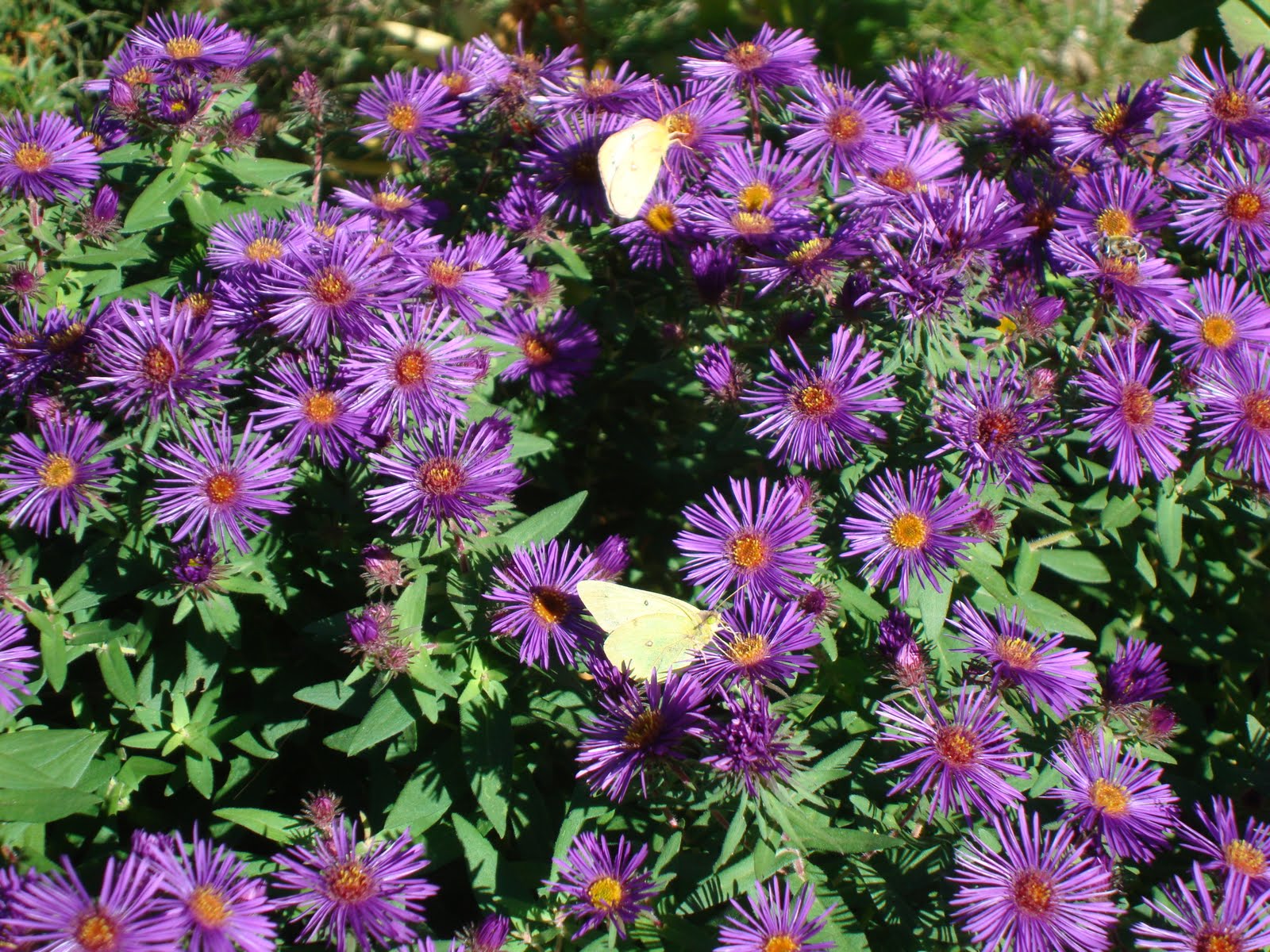
Wonders abound this time of year in our corner of creation. The rich colors of autumn leaves and grasses are probably the most striking change. The flowers in fields and gardens that are still blooming have their own striking colors. Butterflies, including monarchs, are migrating. The air is crisper than it was even a couple of weeks ago, and the sky seems to be a deeper shade of blue as fall sets in. At night, the fall sky can be amazing.
The practice of wonder at the earth, the heavens, and the mysteries of all of God’s unimaginably vast creation can help us be mindful of the majesty, power, and goodness of the Creator and more caring of God’s creation. Our own part of God’s good creation, this blue-green planet we call home, is in need of care and defenders. Today’s reading from Revelation (Revelation 12:7-12 ) about the war in heaven between Michael and his angels against the dragon and his angels gives us an ideal of the forces of good battling the forces of evil. Our battles against forces that would destroy much of the rich variety of life on earth through pollution, habitat destruction, and greenhouse gas emissions require the same sort of persistence and courage that all battles require. It also requires wisdom, the ability to see both the big picture and the smallest of creatures, and the willingness to learn and adapt. Along with calling us to wonder, Michaelmas can call us to renew our commitment to fight for a sustainable environment for all living things.
While we are observing Michaelmas today, our Jewish brothers and sisters are observing Rosh Hashanah, the Jewish New Year and beginning of the High Holy Days. Through the GreenFaith website, I found the post The Binding of Isaac and a Spirit of Optimism by Rabbi Edward Bernstein, a GreenFaith Fellow. Rabbi Bernstein tells how awe of creation and the Creator permeate the story of the binding of Isaac (Genesis 22), one of the biblical texts in the Rosh Hashanah liturgy. Rabbi Bernstein helps us see the dual themes of awe in creation and a call to stewardship of creation in this story. It’s well worth a read, and wonderfully relevant to our own observance this day.
Thursday, September 22, 2011
Pastoral Teaching on the Environment
While meeting in Quito, Ecuador, the House of Bishops of the Episcopal Church issued a Pastoral Teaching about the environmental crisis, saying:
We, your bishops, believe these words of Jeremiah describe these times and call us to repentance as we face the unfolding environmental crisis of the earth:How long will the land mourn, and the grass of every field wither? For the wickedness of those who live in it the animals and the birds are swept away, and because people said, "He is blind to our ways." (Jeremiah 12:4)
May God give us the grace to heed the warnings of Jeremiah and to accept the gracious invitation of the incarnate Word to live, in, with, and through him, a life of grace for the whole world, that thereby all the earth may be restored and humanity filled with hope.
Wednesday, September 21, 2011
Pipeline and Pie at St. Stephen's
Tomorrow evening is the forum about the proposed Keystone XL pipeline (aka Pipeline and Pie) at St. Stephen’s in Grand Island. This event is organized by the Green Team at St. Stephen’s as part of our stated mission: Drawing on Nebraska’s traditions of conservation and moved by Christian hope and purpose, we will engage in whatever learning, actions, and practices make us more caring stewards of God’s creation and better neighbors to the world’s other inhabitants.
As part of our work, we are trying to stay informed about the pipeline and the concerns that have been raised about it. The Rev. Dr. Kenneth Moore, Regional Minister of the Christian Church (Disciples of Christ) in Nebraska and Board Chair of Nebraska Interfaith Power and Light, will speak about why the issues around the proposed pipeline matter to people of faith. Jane Kleeb of BOLD Nebraska will share some general information about the proposed pipeline – what it is, what it would carry, where it would be built – and some of the concerns about the pipeline and its proposed route through the Sandhills and over the Ogallala aquifer. Randy Thompson, whose land is in the path of the proposed pipeline, will talk about his concerns as a landowner and conservationist. We will have time for questions and will continue our conversation over pie and coffee.
The St. Stephen’s Green Team is working toward GreenFaith certification for the parish, which includes a growing point for us: paying attention to environmental justice issues. The Episcopal Church and GreenFaith recently announced the beginning of a new cycle of the certification program in which Episcopal parishes can apply for subsidies to offset part of the cost of the program. Michael Schut, the economic and environmental affairs officer for the Episcopal Church, explains that the goals of the certification program include “supporting the development of faithful, strong environmental leadership; helping congregations learn to reduce their operating costs; and modeling creation care, spirituality and justice throughout a congregation's life and practice.”
Anyone with an interest in the Keystone XL pipeline (or in some good pie and conversation) is welcome to join us tomorrow evening at 7:30. Please come in through red doors on Cedar Street.